What’s Really Happening in the Economy—And Why It Matters for Interest Rates
With the Bank of Canada holding its key rate steady in March, attention has shifted to what comes next. Many expected that 2026 would bring a series of rate cuts—but that outlook has become far less certain.
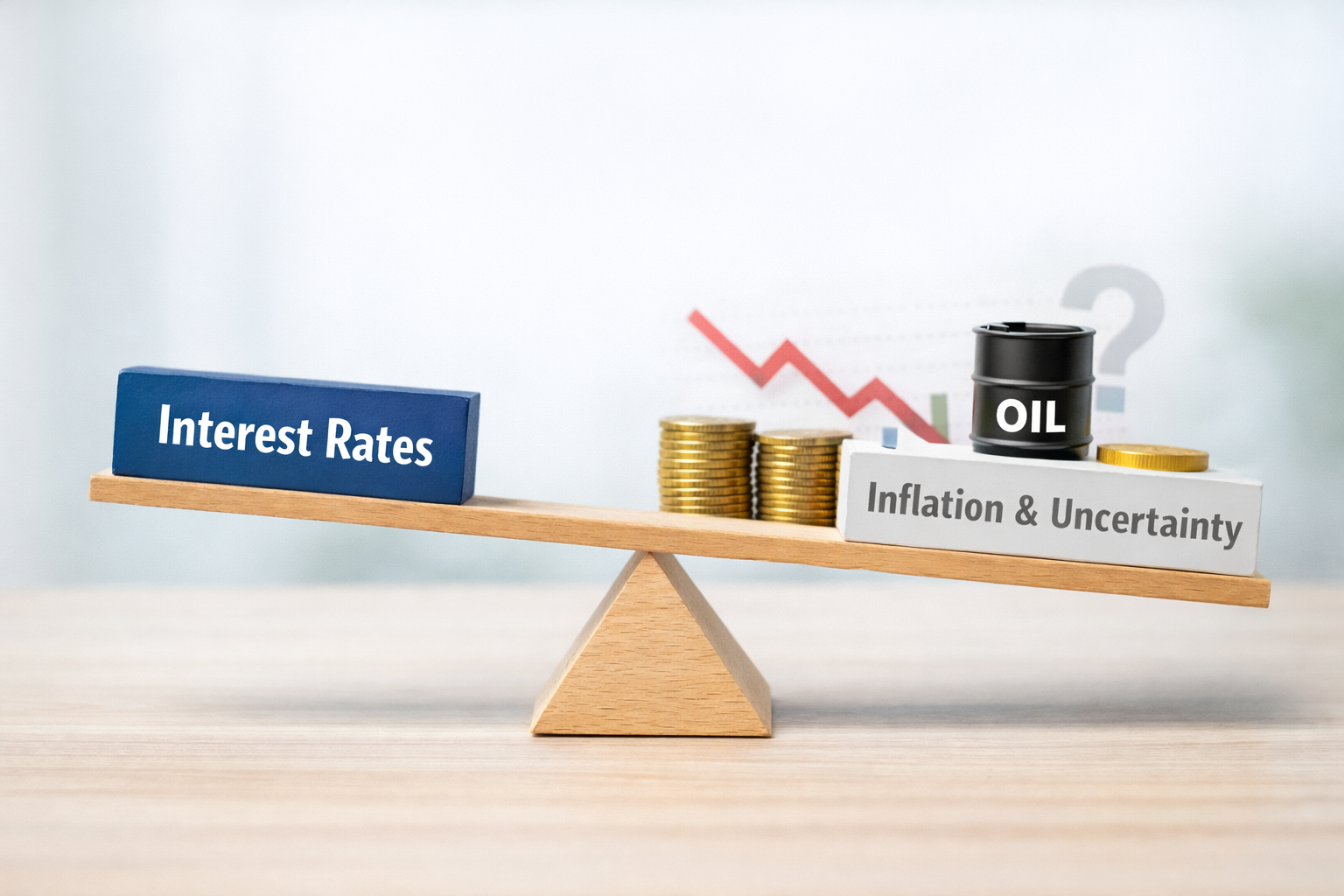
To understand why, you have to look beyond interest rates themselves. Because rates aren’t the starting point—they’re the result of what’s happening underneath in the economy. And right now, that story is more complicated than it’s often presented.
Inflation: Back in Range, But Not Fully Behind Us
Inflation has come down significantly from its peak and is now closer to the Bank of Canada’s target range. On the surface, that would normally open the door to lower interest rates, but the concern isn’t where inflation is today—it’s where it could go next.
Rising food prices, combined with the risk of higher energy costs tied to ongoing geopolitical conflict, create the potential for inflation to move back up. If rates are lowered too quickly, it could reverse the progress that’s been made. That’s why the Bank is moving cautiously.
The Economy Beneath the Headlines
We continue to hear that the economy is “resilient.” But that depends on how you measure it. On a headline level, things may appear stable. but on an individual level, the picture looks very different. Canadians are carrying the highest levels of debt in the G7. Canadians owe approximately $1.77 for every $1 of disposable income.
GDP per capita has declined across multiple recent quarters, meaning the average Canadian is effectively becoming less economically productive, and increasingly, we’re seeing pressure in the labour market. Job losses are becoming more noticeable across sectors, and youth unemployment is historically high, which has a ripple effect on households. This doesn’t necessarily point to a sudden downturn, but it does suggest that the economy is under strain.
Why This Creates a Dilemma for Rate Decisions
This is where things become more complex.
On one hand:
- Inflation is not fully settled
- Global risks remain elevated
On the other:
- Households are stretched
- Economic growth per person is weakening
- Employment is showing signs of softening
Lowering rates could provide relief—but it also risks reigniting inflation.
Holding rates steady helps control inflation, but it prolongs financial pressure, and the economy grinds to a halt. There is no easy move here. Only trade-offs.
The Mortgage Renewal Wave in 2026
One of the most important and often overlooked factors this year is the volume of mortgage renewals.
A significant portion of mortgages set during the low-rate period of 2020–2021 are coming up for renewal, with peak renewal activity expected around mid-2026.
For many of these homeowners, the reality will be a reset:
- Higher interest rates than their original term
- Higher monthly payments
- And in some cases, reduced financial flexibility
This creates another layer of pressure on households that are already managing elevated debt levels and higher living costs.
There are also implications for the housing market. Some homeowners may choose—or be forced—to sell, introducing more motivated listings. At the same time, not all borrowers have the flexibility to shop around for better rates, particularly if their financial position has weakened or if refinancing options are limited.
In certain cases, this can create a more constrained environment where homeowners are balancing higher costs without easy alternatives. Taken together, the renewal cycle is one more factor that could influence both market activity and pricing dynamics in the months ahead.
Why Fixed Mortgage Rates Don’t Always Follow the Bank of Canada
One of the biggest misconceptions is that mortgage rates move in lockstep with the Bank of Canada.
In reality:
- Variable-rate mortgages are directly tied to the Bank’s overnight rate
- Fixed mortgage rates are driven by Government of Canada bond yield
Bond yields are influenced by investor expectations—particularly around inflation, economic growth, and global uncertainty.
If investors believe inflation could rise again, or that risks are increasing, they demand higher returns. That pushes bond yields higher—and in turn, fixed mortgage rates often rise as well.
This can happen even when:
- The Bank of Canada is holding rates steady
- Or markets expect future rate cuts
In other words, fixed rates are forward-looking. They often move based on where markets think things are heading, not where they are today.
What This Means for Buyers and Sellers
This is not a simple “rates are going down” environment.
- Buyers: Waiting for lower rates may not produce the outcome expected. Fixed rates can move independently, and timing the market has become more difficult.
- Sellers: Stability—even at higher rates—can actually improve buyer confidence. Uncertainty is often more damaging than higher borrowing costs.
- Everyone: This is a more nuanced market than we’ve seen in years. Understanding the why behind rate movements is more important than reacting to headlines.
The Bottom Line
Interest rates are often treated as the story, but they’re really just the outcome. What matters more is what’s happening underneath:
- inflation risks that haven’t fully disappeared
- an economy that is showing signs of strain
- and global factors that continue to add uncertainty
That’s why rate decisions, and mortgage rates, may not move as predictably as many expect. If you are renewing a mortgage in the near future, don't leave it until the last minute. Consult with a Mortgage Broker early to explore the best rates and terms.